


The world is once again watching wars unfold in real time. But what happens after the shooting stops? How long does war live on in people, in cities, in families, and in the way former enemies see one another? For psychologists Shpend Voca and Mirjana Rupar, these are not distant academic questions.
 4 min.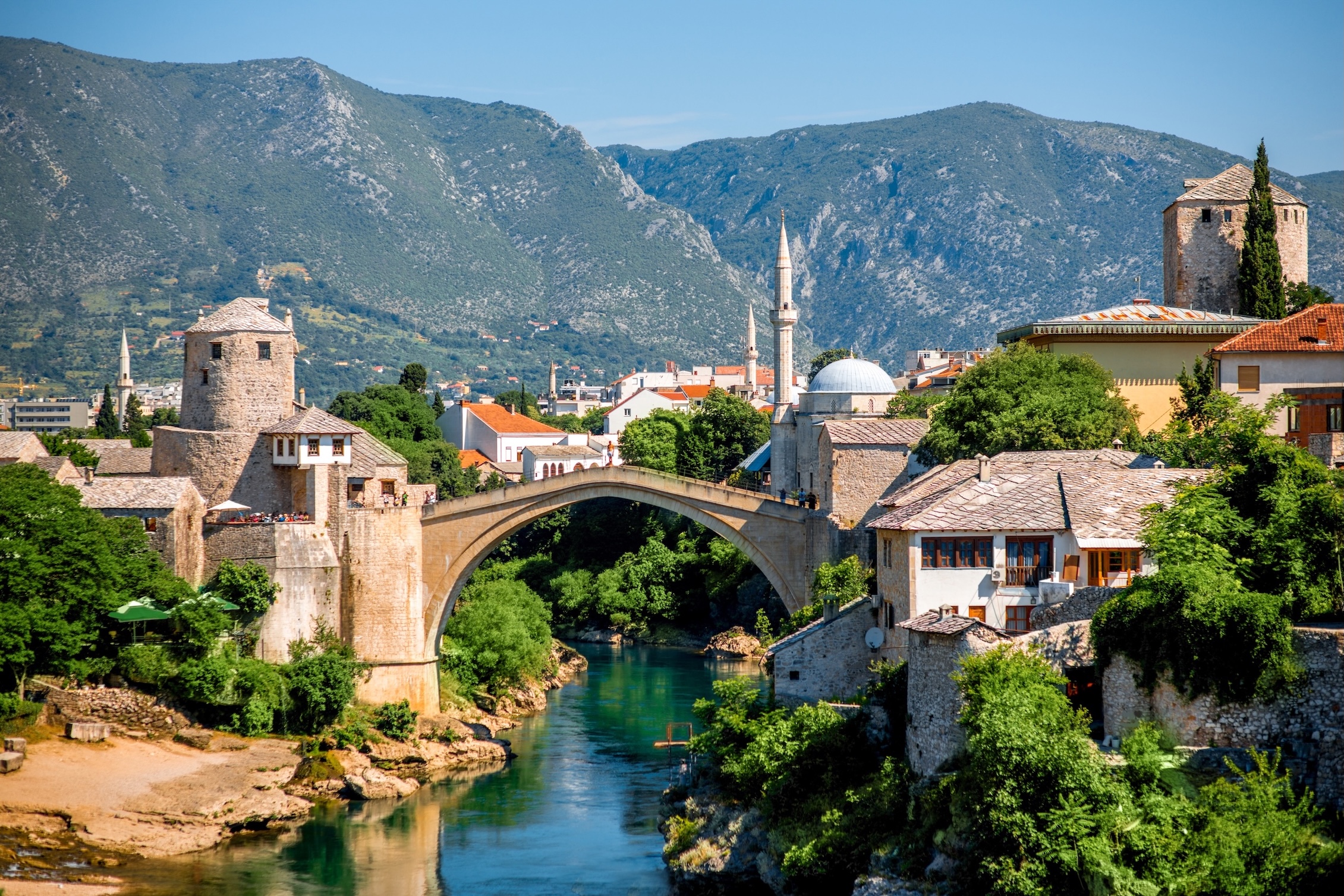

Both researchers lived through the wars linked to the breakup of Yugoslavia, and both now study reconciliation in post-conflict societies. They work at the Institute of Psychology of the Czech Academy of Sciences and collaborate with the Faculty of Education, University of Ostrava as part of the DigiWELL project. Rupar, who grew up in Mostar, focuses on Bosnia and Herzegovina. Voca focuses mainly on Kosovo. As Voca puts it, “My experience during the war has definitely shaped my research interests.”
Rupar offers a definition that immediately changes the scale of the debate: “Reconciliation goes beyond the mere absence of violence.” In other words, peace is not just the end of fighting. From a psychological perspective, reconciliation is a long process in which negative perceptions, emotions and behaviors gradually shift.
Researchers work with the needs-based model of reconciliation, which argues that victims and perpetrators emerge from conflict with different psychological needs. Victims need empowerment, while perpetrators need a path back to being seen as moral actors.
Reconciliation goes beyond the mere absence of violence.
In that sense, reconciliation is not forgetting. It is rebuilding the conditions in which people can live together again.
Rupar’s childhood in Mostar shows how deeply conflict can shape ordinary life. She describes a city divided into two parts, with two schools, two hospitals, two fire brigades, where identity is present everywhere — from names to language to everyday routines. “From a very young age you are naturally exposed to this division,” she says.
For Voca, the same logic appears in Kosovo. Segregated areas, different media worlds, different symbols, and a lingering sense that some places are not fully safe for everyone. That is why reconciliation is so difficult. As he says, conflict does not only damage relationships; “Conflict also destroys economies, political systems, health systems.”
One of the key findings in their work concerns how people interpret suffering. In post-conflict societies, many people fall into what psychologists call competitive victimhood — the belief that their group suffered more than the other.
Their research suggests that this mindset harms reconciliation. By contrast, inclusive victimhood recognizes that more than one group suffered. “If we can frame suffering in inclusive terms,” Voca says, “this can contribute to reconciliation.”
Their studies in Kosovo and Bosnia and Herzegovina show that this more inclusive view can increase empathy and trust and make people more willing to engage in contact with former adversaries.
That willingness to meet matters because contact is one of the basic conditions of reconciliation. Yet in segregated settings, direct contact is often limited or absent. Rupar therefore looks not only at face-to-face meetings, but also at indirect forms of contact: stories told in families, memories passed across generations, or even learning that one’s parents once had positive relations with members of another group. She argues that such transmission of positive stories can open space for better attitudes.
Did you know?
The Bosnian documentary series Ordinary Heroes, produced by the Post-Conflict Research Center and broadcast on Al Jazeera Balkans, tells true stories of people who helped someone from “the other side” during the war. These are exactly the kinds of stories that show how media can do more than deepen division — they can also support understanding and reconciliation.
This is where the media enter the picture. In many post-conflict societies, the media have long amplified one-sided narratives and negative images of the other side. But Rupar’s research points to another possibility. “While on one side the media can definitely reinforce the division, it can also serve as a bridge between the communities,” she says. Her team found something surprising: in Bosnia and Kosovo, positive information about the outgroup can have a particularly strong effect precisely because people are so used to negative news. “Positive information matters a lot,” she says.
Among the most powerful examples are stories of moral heroes. People who crossed ethnic boundaries during war to save someone from the other side. According to Rupar, hearing such stories can make people feel morally elevated, inspired by someone else’s courage, and more able to see the other group in a positive light.
Neither researcher offers easy optimism. Full emotional closure may be unrealistic in some places, even decades later. But both point to practical steps. Voca argues that governments and institutions can contribute to creating spaces where former adversaries feel safe enough to meet, for example cafés, community venues, sports activities, cultural events, or local projects built around inclusion.
Reconciliation, then, is not a single grand gesture. It is a patient effort to rebuild trust, contact, and the social structure that war tears apart.
You can listen to interviews with both researchers in a new two-part episode of the Věda zblízka podcast