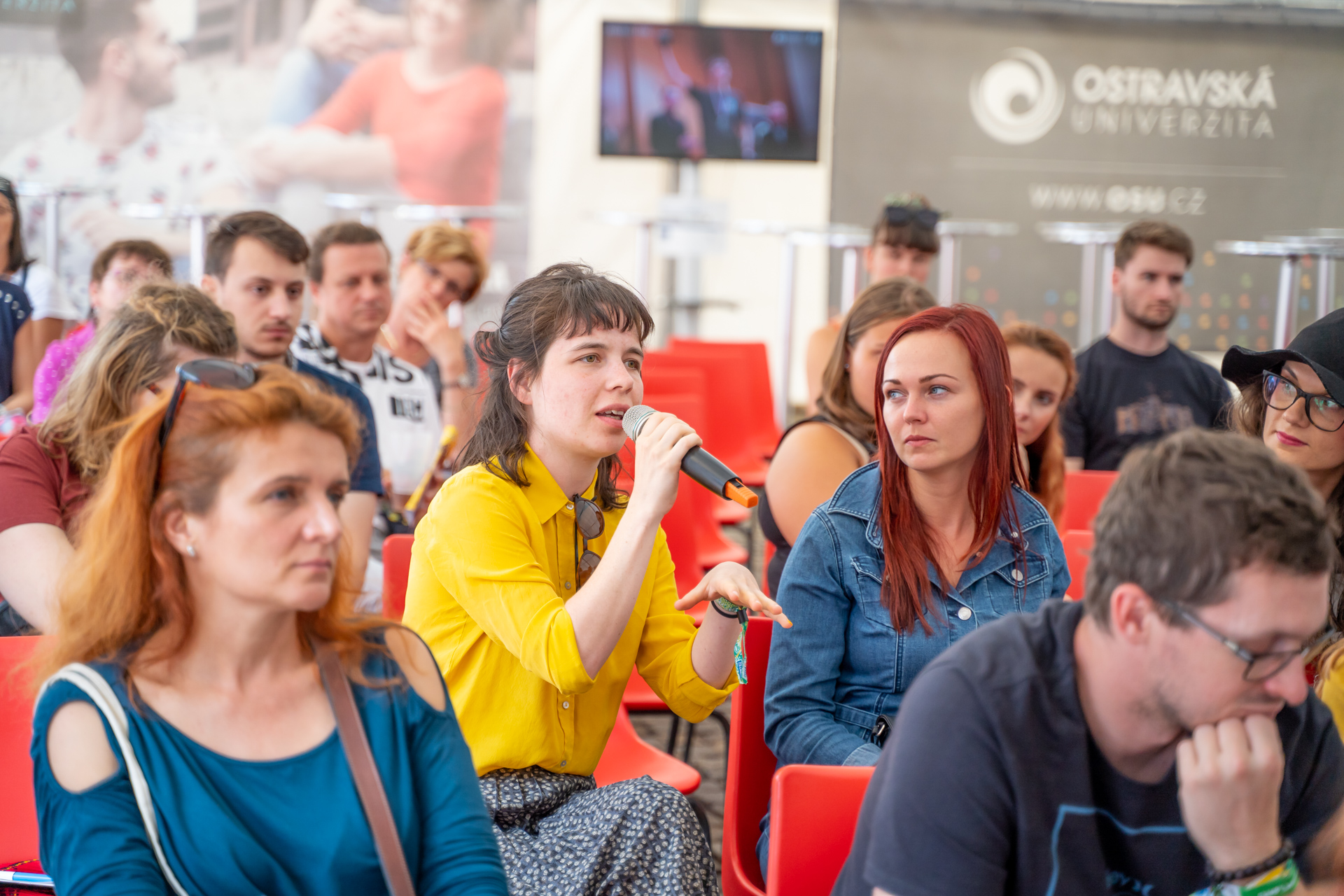



Two days dedicated to digital technologies, health and wellbeing. The DigiWELL Impact Forum, held on 1 and 2 October at the University of Ostrava’s City Campus, brought together researchers from several Czech and international institutions.
 5 min.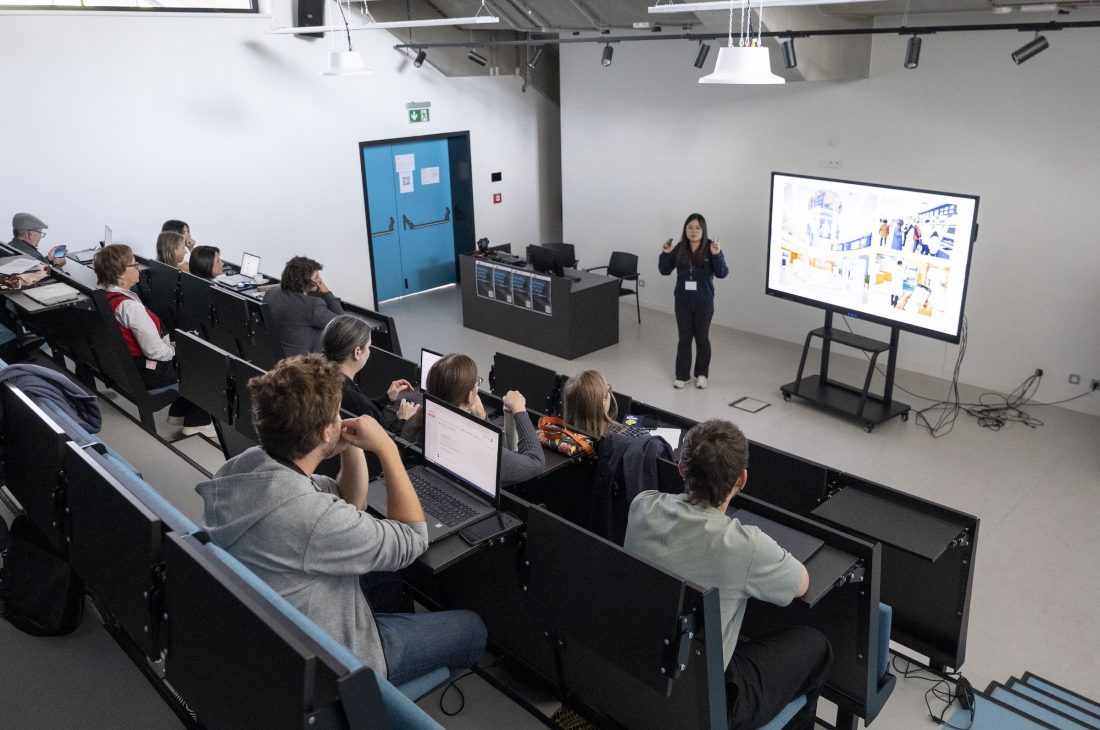
Alongside researchers from the University of Ostrava, the programme featured scientists from Masaryk University, Palacký University Olomouc, the National Institute of Mental Health, the Czech Academy of Sciences, as well as other Czech and international guests.
“The aim of the DigiWELL project is to understand how digital technologies affect our health and wellbeing, while also looking for ways to use them to our advantage,” said DigiWELL principal investigator Prof. Steriani Elavsky. “At the conference, we wanted to show how far our research has progressed during the first half of the project and how its findings can contribute to solving specific problems,” she added.
The first day of the Impact Forum was devoted primarily to research presentations. The programme demonstrated the breadth of topics explored by DigiWELL researchers, ranging from the use of EMA data and wearable devices to digital interventions focused on health and physical activity and new analytical methods for wellbeing research.
At the conference, we wanted to show how far our research has progressed during the first half of the project and how its findings can contribute to solving specific problems.
A separate session focused on children and adolescents, addressing topics such as mobile phone bans in schools, app use and the relationship between digital media and young people’s wellbeing.
On the second day, attention turned, among other things, to artificial intelligence and ageing. Researchers discussed the use of AI in elder care, digital technologies in healthcare, virtual environments in therapy and the relationship between social media and loneliness. A poster session showcasing further ongoing research was held at the same time.
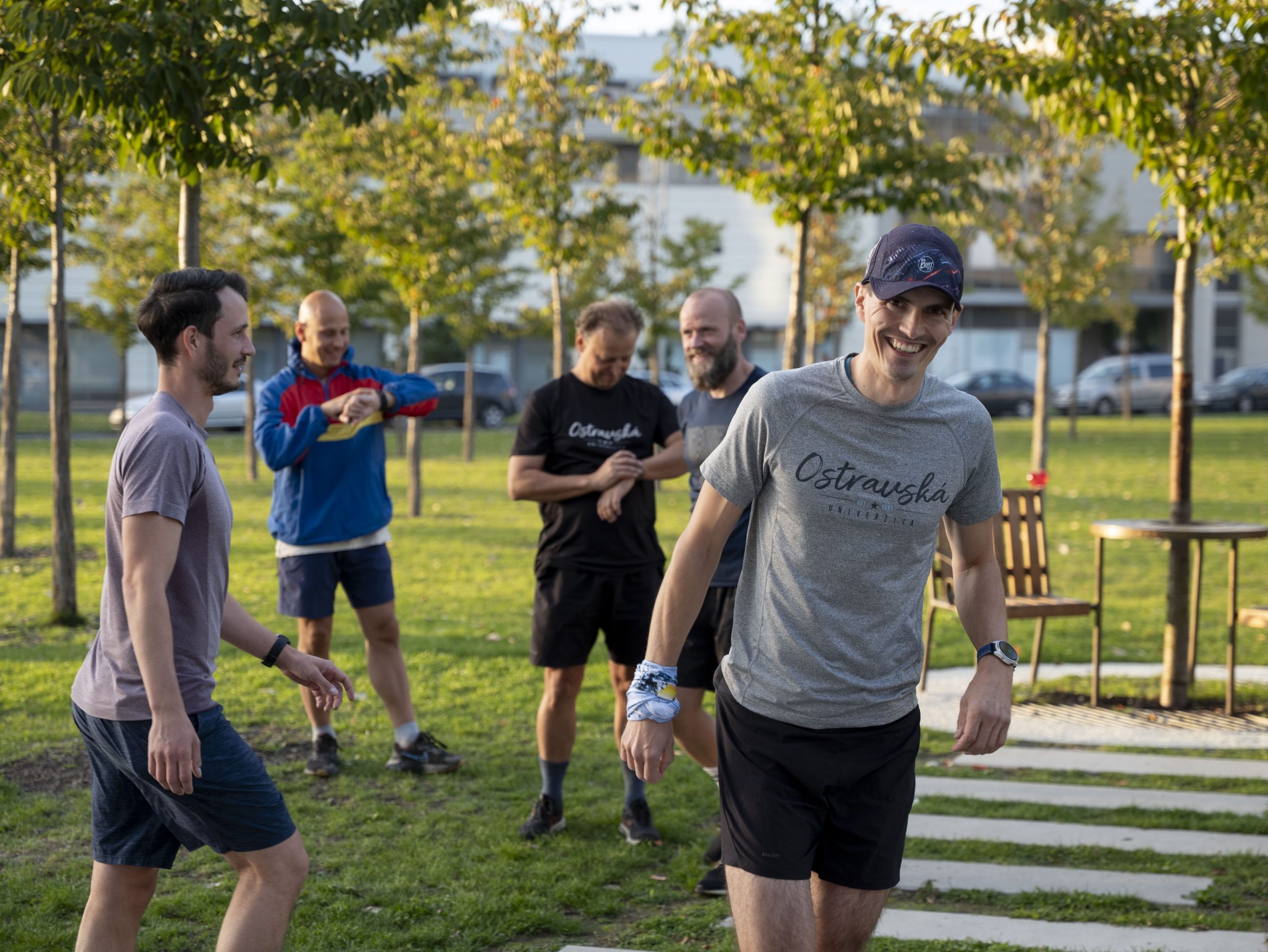
During breaks, researchers could also take part in sport activities, including running, yoga and climbing.
The Impact Forum also gave significant space to junior researchers. Conference participants were invited to vote for the best research presentation and the best poster by a junior researcher.
Third place among the presentations went to Adéla Švestková from Masaryk University, who introduced presentation How Do We Choose Physicians Online? A Mixed-Methods Eye-Tracking Study.
Second place went to Vojtěch Mýlek, also from Masaryk University, whose research examines which patterns of social media use are associated with loneliness compared with face-to-face social contact.
The secret of a good poster is simplicity and the ability to highlight the most important and interesting parts of the research.
The top prize went to Lenka Knapová from the Faculty of Education at the University of Ostrava. Her presentation showed that motivation can be influenced also by the surrounding environment, including weather and other environmental conditions.
For Knapová, the key to a successful presentation is making it easy to understand. “It is also important to move away from academic jargon as much as possible,” she said. “Personally, I also think it is important to enjoy the presentation. I am currently looking after two small children, so having the opportunity to speak in front of people and present my research is very valuable and enjoyable for me. I was genuinely very grateful for the opportunity,” she added.
The award for the best poster went to Zoe Guerrero from the National Institute of Mental Health. Her research is connected with the development of a wellbeing app intended for the wider public.
“I think a good poster has two secrets. The first is its visual side: simplicity and the ability to highlight the most important and interesting aspects of the research,” Guerrero explained. “At the same time, it should convey enthusiasm for the topic and for what new insights we are bringing,” she added.
DigiWELL is an interdisciplinary research project led by the Faculty of Education at the University of Ostrava. In cooperation with partner institutions, it explores the impact of digital technologies on health and well-being, as well as ways in which these technologies can be used beneficially. The principal investigator is Prof. Steriani Elavsky.
According to Guerrero, conversations during the poster session also generated ideas for further work with the data already collected.
“Several visitors asked me whether we had compared responses from people in different age groups,” the junior researcher continued. “We did not look at that in this study because of the relatively small number of participants, but that question inspired me to return to the data and explore it further,” she concluded.
The award-winning junior researchers left the Impact Forum with certificates as well as prizes.
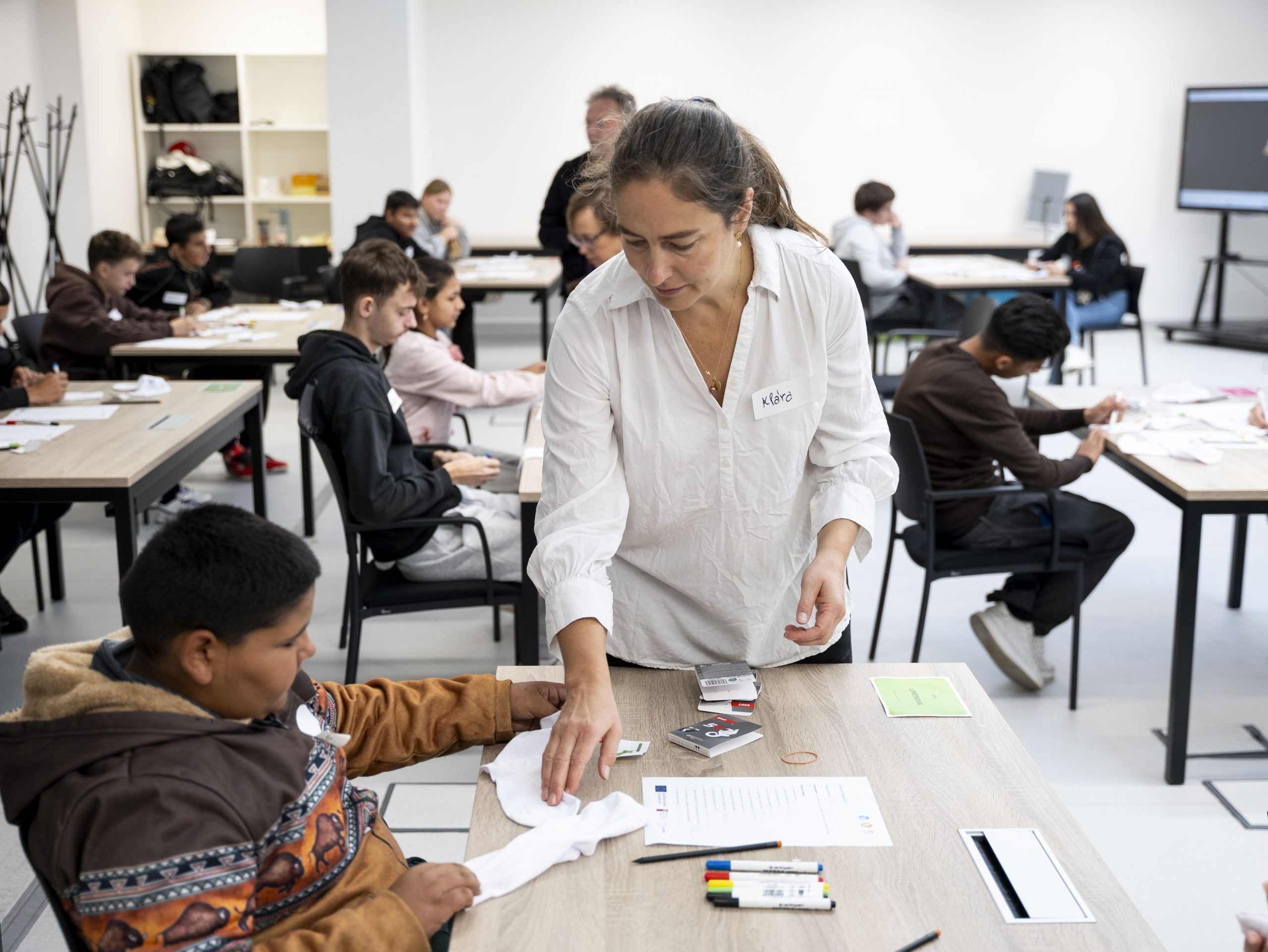
A workshop organised by the Institute of Psychology of CAS introduced students to the playful Speed Socks method.
The programme also included two workshops designed to bring the project’s findings and themes closer to other groups.
The Institute of Psychology of the CAS organised a workshop called Space for Understanding, attended by middle school students.
The playful activity was designed to help students better understand how prejudices arise and how easily we form judgements about others before we truly get to know them. After a short introduction to stereotypes, the students were paired up, with each pair consisting of a Roma students and a Non-roma students. The activity followed a speed-dating format. Using prepared questions, the students tried to get to know each other as well as possible and then designed a sock intended to capture something about their partner.
Our aim was to support safe intergroup contact, challenge stereotypes and develop empathy, mutual respect and understanding.
The pairs then changed and the process was repeated. In the end, each pupil took home an original pair of socks created from someone else’s perspective, capturing something about their personality, interests or what they had revealed during the conversation.
“Our aim was to support safe intergroup contact, challenge stereotypes and develop empathy, mutual respect and understanding among young people from different social groups,” explained workshop facilitator Martina Hřebíčková. “At the same time, we explored ways in which these relationships can be improved through personal contact, sharing experiences and taking part in a joint activity,” she added.
After the workshop, the students also had an opportunity to see researchers at work. They toured the City Campus and its sports facilities and visited the laboratories.
The second workshop was organised by the Healthy Generation team from Palacký University Olomouc. Radek Palaščák and Michal Kalman showed participants what goes into preparing a press conference and how scientific research findings can be transformed into a format that is accessible to the media and the wider public. The workshop, entitled UPOL Challenge accepted: Organising a scientific meeting with public and media impact, highlighted another dimension of research work: the ability to bring scientific knowledge beyond academia and closer to the public.
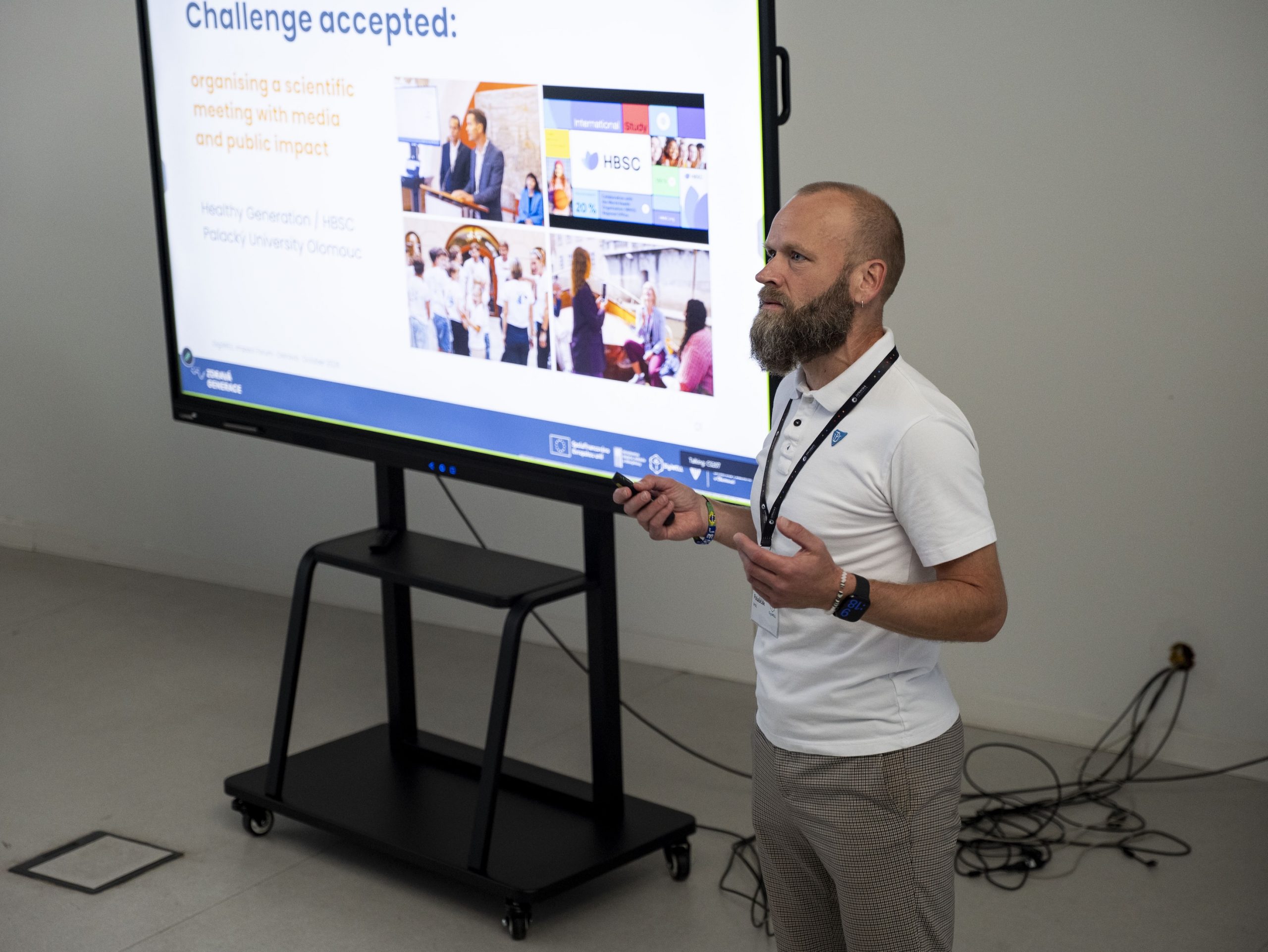
Colleagues from Palacký University Olomouc also prepared a dissemination workshop.