


The University of Ostrava’s strategic project REFRESH, focused on regional development, has successfully passed mid-term evaluation and is moving into its second half. We present an interview with Ondřej Slach, Scientific Director of Social Lab and Vice-Rector for Strategy and Development at the UO.
 10 min.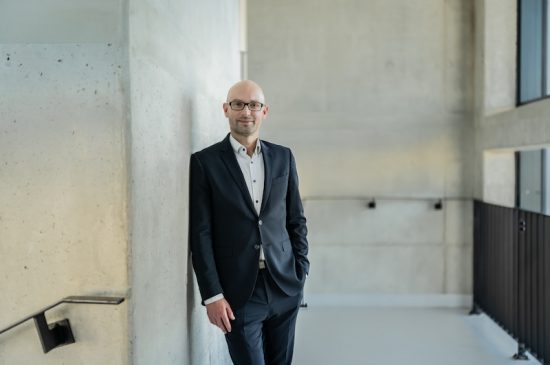

One of the University of Ostrava’s strategic projects, REFRESH, underwent a mid-term evaluation a few weeks ago and has just received a positive result, which means, among other things, that funding has been released for the second half of the project. Which conclusions from the evaluation do you consider most significant for Social Lab?
The mid-term evaluation was very successful and confirmed that Social Lab is in good condition. For us, the key takeaway is that it is a truly fresh and vibrant project that not only meets all predefined requirements but even exceeds them in some indicators. This puts us in a very strong position for the second half of the project. The evaluation consisted of two parts. Firstly, there was the formal aspect, where we verified that all milestones and commitments had been met. The second part—perhaps even more important to us—was our internal dialogue-based evaluation, which preceded the official one. We gradually met with all the project researchers; there are roughly 130 of them, and approximately 90% presented their activities. In short 200-second segments, the teams presented what they are working on, what their current results are, and what impact their work has on the region. Our goal was not to check whether tasks were completed, but to have a genuine meeting to share and understand what everyone is doing. At the same time, it helped us identify whether there was a need for any specific support from management. An important added value was finding overlaps between the topics of different working groups, which could lead to future collaboration. Interdisciplinarity is one of the pillars of the project. Overall, the evaluation confirmed that we are on the right track and provided us with valuable insights for planning the Social Lab’s operations over the next two years.
REFRESH, short for Research Excellence for REgional Sustainability and High-tech Industries, promises to transform the region. Can we already talk about real changes in the city? Are there any specific, tangible results for the Social Lab?
We can observe the impacts along two lines: on the university and on the region. The measurable benefit for the university lies primarily in attracting high-quality researchers and significantly strengthening our research potential in areas that are key to the region’s development. There are currently 27 foreign researchers working on the project, whom we likely would not have attracted without REFRESH. The researchers bring not only research excellence but also valuable contacts and international connections.Our ambition is that these people will help prepare the university’s international projects in the future and further enhance its visibility, competitiveness, and prestige. Thanks to the project, we are more flexible, have greater capacities, and can bring more resources and opportunities to the region in the future. The impacts on the region itself are long-term in nature and will not be felt immediately. REFRESH is problem-oriented, meaning it is designed to respond to specific societal challenges. A good example is the area of housing: the project’s research findings are currently being utilized in the creation of a strategic document for the city of Ostrava, which focuses on how to systemically address the city’s housing problem. Another topic is the low birth rate and the outflow of families to other cities. The project is therefore also developing a family policy concept and conducting research that collects data and outlines possible ways to cope with these challenges in the future. A tangible, real-world impact can realistically be expected within five to ten years.
As you have mentioned, one of Ostrava’s major problems is population outflow. In its early stages, REFRESH needed to build a base of foreign experts, who, conversely, had to move to the city to work on the project. Was it difficult at first to attract a sufficient number of people?
The first year was extremely challenging in this regard. The project has to comply with a number of regulations; for example, salaries are calculated according to Czech regulations, which is usually not very attractive to foreign researchers. At first, I even thought we had set the bar too high and that we simply would not be able to find the right people. After all, Ostrava is a city in Eastern Europe that is still undergoing its transformation; it’s not Prague, Brno, or Munich. I was pretty nervous at first. Gradually, however, it became clear that the project is designed in a very interesting way and offers researchers a relatively high degree of autonomy. A key factor was precisely the fact that Ostrava is undergoing a profound transformation right now, which allows you to be a real part of concrete change. If we were in an established city, Copenhagen for example, and applied my research in urban development there, we would mostly just be fine-tuning details, and that is not as appealing. In Ostrava, the change is so intense and profound that it allows us to apply our research in practice very quickly and tangibly. It was precisely the opportunity to be a direct and active part of this transformation that ultimately proved to be a strong motivation for many researchers to join the project. The city still has a relatively poor public image, but in reality, people like it here. It has a well-developed public transportation system, a relatively low cost of living, a safe environment, and good, accessible services. In fact, safety, along with the quality of services such as healthcare, has proven to be one of the city’s greatest attractions. Today, the situation has improved significantly. Thanks to the researchers who moved to Ostrava at the start of the project and their mutual communication and networking, it has become much easier to attract new people.
What makes the REFRESH project unique?
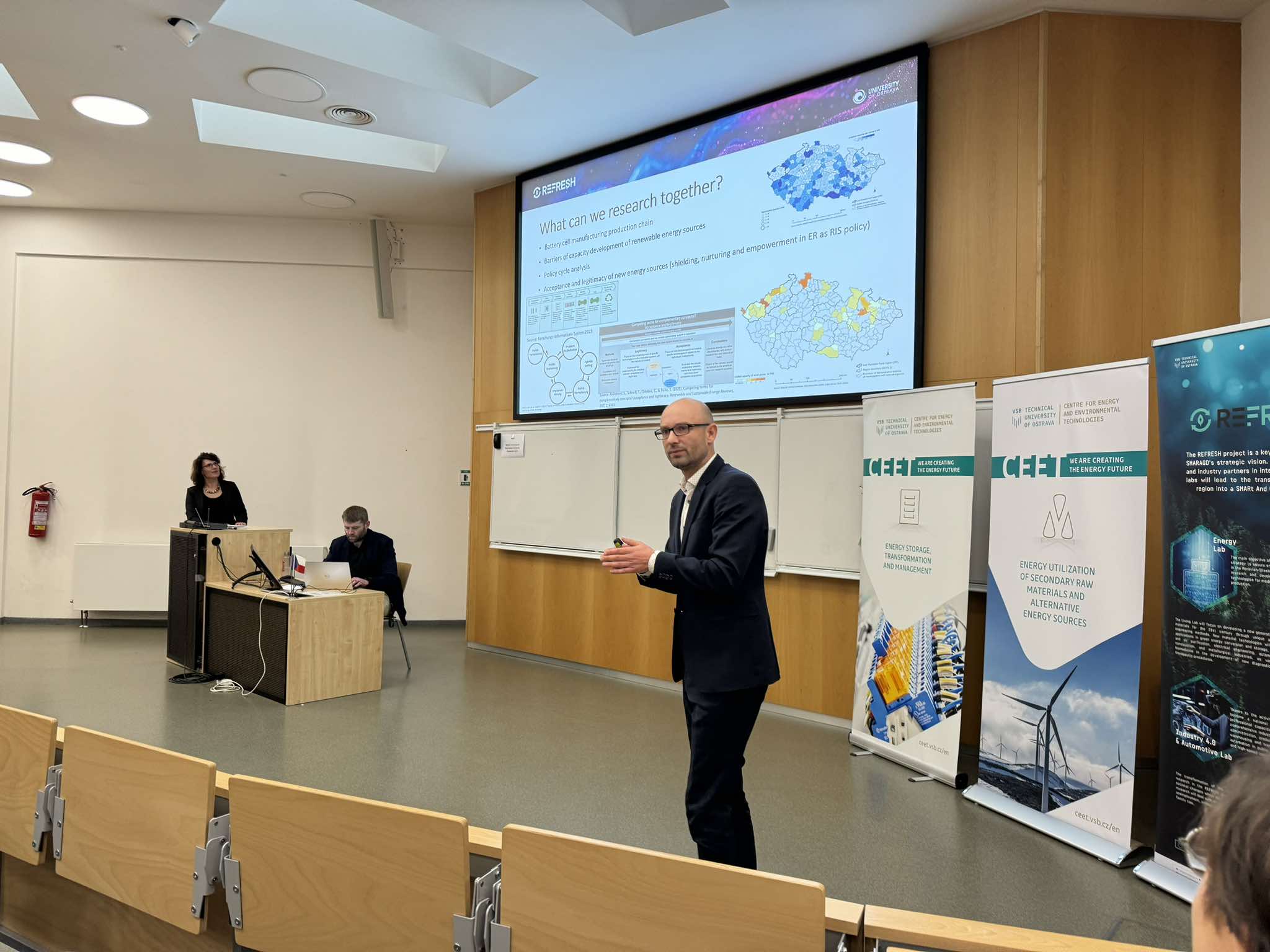
The unique thing about REFRESH is that it brings together people from different fields—such as fuzzy modeling, sociology, geography, or philosophy—to tackle a single problem. They all address the same societal issue, but each from the perspective of their own discipline. Each expert brings different questions, a different way of thinking, and different data to the discussion, and that is precisely what drives the research forward in a unique way. The goal is to find the best possible solutions to complex societal challenges. Unlike other projects, which tend to narrow their focus to a single topic, a single problem, or a single solution, REFRESH is open. It experiments, explores, and connects.
Is the project succeeding in being truly interdisciplinary, even though it is still at the halfway point?
So far, we have been partially successful in this, and deepening this collaboration is one of our main goals for the next two years. But there is a logic to it – the first step is always to “get your own house in order,” that is, to establish good cooperation within Social Lab itself. And we have managed to do that, even though it was not easy at first, because Social Lab is not a homogeneous unit either. The second step is closer collaboration with technical fields, particularly with VSB-TUO – Technical University of Ostrava. This year, we want to significantly strengthen this collaboration, for which we have the support of the rector of VSB-TUO. In the future, it could serve as a source of new research topics and follow-up projects. I am a geographer; for us, an interdisciplinary approach comes quite naturally, but for colleagues in some other fields, it often poses a major challenge. Yet the basic prerequisite for interdisciplinary research is high-quality research within each discipline. It is precisely the interconnection of these strong foundations that is key to genuine progress in knowledge. As a geographer, for example, I see only part of the problem, perhaps 20%. Colleagues from other fields help me explore it much more deeply and within a broader context.
Are you noticing this positive social impact outside of the project as well?
REFRESH has truly contributed to interdisciplinary collaboration within the university. I have been at the university for twenty years, and in the past, it was common for me to go five years without meeting anyone from another faculty. Of course, the university’s spatial spread across the city plays a role in this—one building is in the center, another at Hladnov, and another in Mariánské Hory. We do not have a chance to run into each other naturally, not even in the cafeteria. For a geographer to meet a philosopher, they had to formally schedule a meeting. Today, it seems completely normal to us that people know each other and collaborate, but in the past, that was certainly not a given. And it is precisely REFRESH that significantly deepens these relationships. It is a major shift that we may not even fully realize at the moment, because it is happening so quickly.
Apart from more in-depth interdisciplinary research, what do you want to focus on in the second half of the project?
Definitely on greater involvement of young researchers. I feel that so far, the initiative has mainly come “from above” from us in management, and I would like our younger colleagues to be more active, with us serving more as a support system for them. My role is to create an environment that enables high-quality research and to organize opportunities for people to meet and collaborate. Our doctoral school, for example, which brings together doctoral students from various study programs, is working well in this regard.
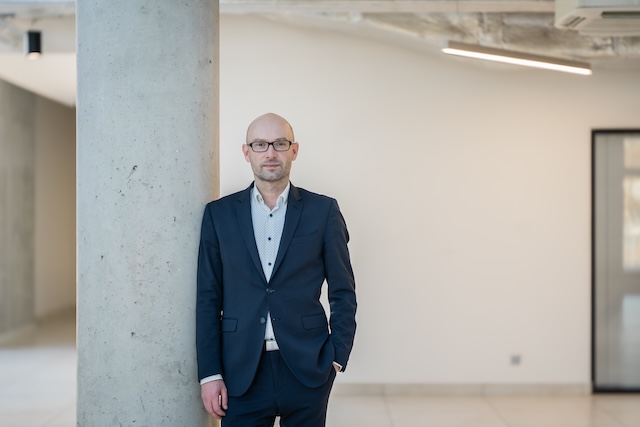
What made you personally realize that transforming our region is essential?
I have actually always been frustrated by the things around me. I spent some time in Germany, where applied research is a natural part of an academic’s work. You are expected to actively contribute to positive change in your environment. It seemed completely natural to me: in research, you search for the truth, but at the same time you want your work to have a real impact. This is precisely why the REFRESH project is ideal for me. It reflects my lifelong effort to conduct high-quality research and, at the same time, apply it to our region, which I love. For me, it is a standard part of how social science research works. To give some specific examples, we are addressing the housing issue I have mentioned earlier and aim to propose a systemic solution. My ideal scenario is that in ten years, we will see that specific change right here in the city and meet people benefiting from it to improve their lives in Ostrava. That is exactly why Social Lab resonates so deeply with me. From the very beginning, it was designed to combine research with practice and lead to real, long-term changes in the region. That is something I consider absolutely crucial and fulfilling.
How do you personally feel about the university’s success in securing and successfully launching such major strategic projects as REFRESH and LERCO?
I feel a great sense of satisfaction that someone has finally allocated the sufficient amount of funding for this type of project. In all honesty, I think that what happened here in the past was, at times, rather undignified. This makes me even more appreciative of the fact that the university was able not only to come up with such an ambitious project, but above all to prepare it so well—and I certainly do not consider that a given or an easy task. It is excellent news that both the REFRESH and LERCO projects, which are running in parallel, are currently viewed as problem-free, a fact confirmed by their successful mid-term evaluation. We have no trouble fulfilling our obligations in terms of project management, and we have very strong in-house capacities. It is also very positive that, as a university, we are capable not only of preparing projects of this scale but also of successfully implementing them and, ideally, sustaining them in the future. For potential partners, this is a clear signal that the university is capable of effectively managing billion-dollar projects while simultaneously fulfilling its social role. Looking ahead, this represents an investment in the university’s growing prestige. One could say it is a sort of “byproduct” of these projects, but all the more valuable for it.

This is another outcome of the strategic project Life Environment Research Center Ostrava (LERCO), reg. no. CZ.10.03.01/00/22_003/0000003, which is one of the tools enabling the transformation of the Moravian-Silesian Region from a “coal-based” to a “healthier and smarter” region.