


In the classroom, attention is often associated with silence, sitting still, and concentrating over a textbook. Movement, on the other hand, is sometimes seen as the opposite: something that makes students tired, overexcited, or less ready to learn.
 3 min.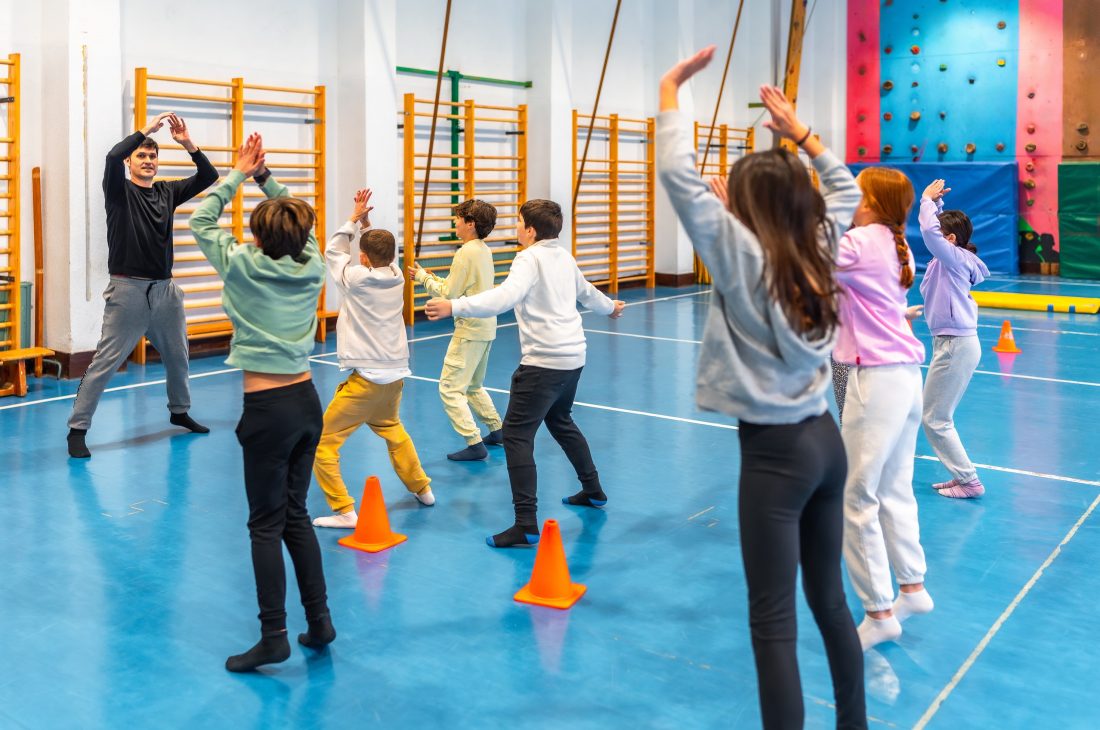
Physical education has often suffered from this stereotype. In many schools, PE is still viewed mainly as a “break” from real learning, a lesson where students run, play games, and release energy before returning to more serious subjects.
This view is also reflected in the way PE is sometimes placed in the school timetable — very early in the morning, at the end of the day, or in less desirable time slots. But what if this perspective is too narrow? What if a well-conducted PE lesson does not disturb attention, but may actually support it?
Our team at the Faculty of Education, University of Ostrava, looked at this question in adolescents aged 14 to 19 as part of the REFRESH project. We wanted to know whether students’ attention changes immediately after a regular physical education lesson.
Importantly, we did not test a special training programme or an artificial laboratory activity. The students took part in their normal PE lesson, as scheduled by the school. Before and after the lesson, they completed a computer-based attention task known as the Navon task.
The Navon task measures how quickly and accurately people respond to visual information. Students see large letters made up of smaller letters and have to decide whether they see or detect certain target letters.
This allows researchers to examine both the ability to notice the “whole picture” and the ability to focus on details. During the PE lesson, students also wore wrist accelerometers, which recorded how much time they spent moving and at what intensity.
The results were encouraging. After the PE lesson, students responded more accurately and faster than before the lesson. Those who spent more of the lesson actively moving, especially at moderate-to-vigorous intensity, showed better improvements than those who were inactive for longer periods. In other words, the lesson did not seem to make students less attentive. On the contrary, when students were meaningfully active, their attention appeared to improve immediately after PE.
This matters because attention is not only a psychological concept. It is part of everyday school life. A student who can focus more effectively may be better prepared to follow instructions, understand new material, solve problems, and avoid unnecessary distractions.
From this perspective, physical education should not be seen only as a subject that supports physical fitness. It may also be part of a broader school strategy for supporting learning, cognitive functioning, and well-being.
Physical education may also be part of a broader school strategy for supporting learning, cognitive functioning, and well-being.
At the same time, the findings should be interpreted carefully. The study involved a relatively small group of students, and attention was measured before and immediately after one PE lesson. We cannot say that every PE lesson will always improve attention, or that movement alone is a simple solution to learning difficulties.
The content of the lesson, the intensity of activity, students’ motivation, time of day, and the balance between physical and mental demands may all play a role.
Still, the study offers an important message for schools: PE should not be treated as a distraction from learning. A physically active lesson, in which students spend enough time moving, may help create better conditions for attention after the lesson.
Rather than asking whether PE “takes time away” from academic subjects, we might ask how PE can be organized so that it supports the whole student — body, mind, and learning.
Cocca, A., Unterkircher, J., Cocca, M., & Kopp, M. (2026). Acute effect of a physical education lesson on attention in a population of adolescents. Quest. Advance online publication. https://doi.org/10.1080/00336297.2026.2641133