


Nearly two dozen researchers from seven Central and Eastern European countries met in Ostrava to discuss the history, present, and future of critical criminology.
 6 min.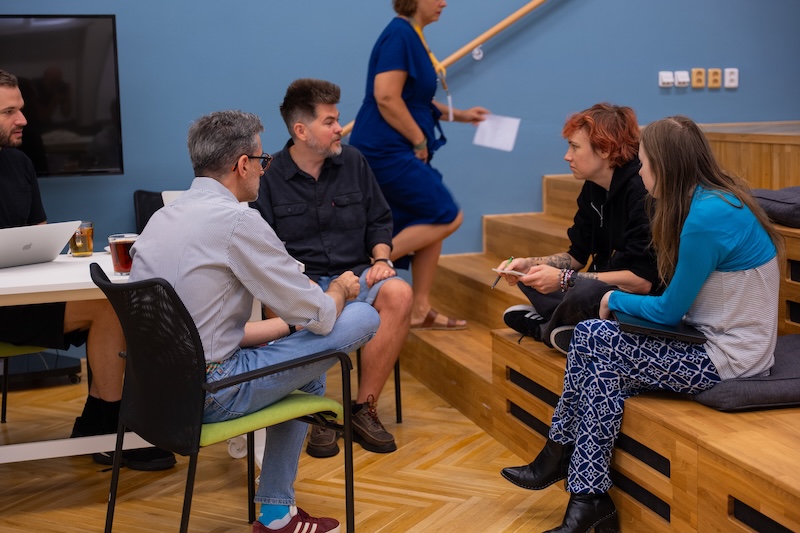
An approach that questions prevailing definitions of crime and examines offenders and victims to the same degree as the criminal justice authorities, the media, political representation, and the other actors that shape our ideas about crime and its control.
What does critical criminology look like in Austria, Czechia, Hungary, Lithuania, Poland, Romania and Slovenia? How does it differ from traditional criminology in these countries, and how should it develop further? What kinds of joint research and teaching activities could we carry out together?
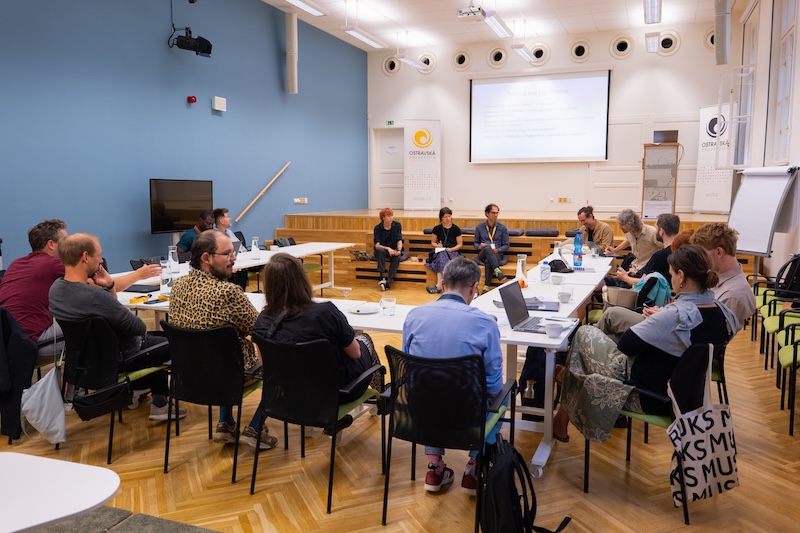
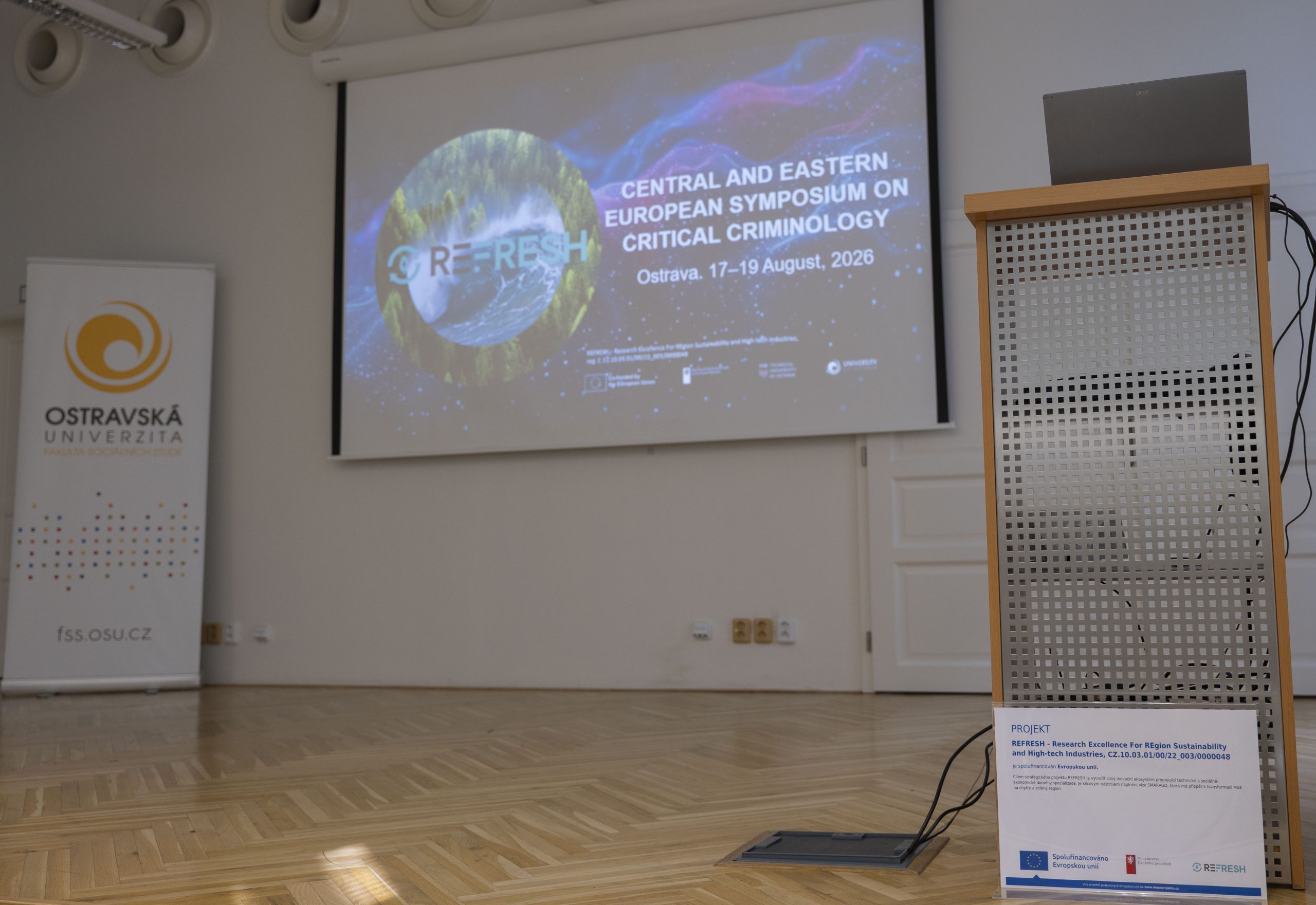
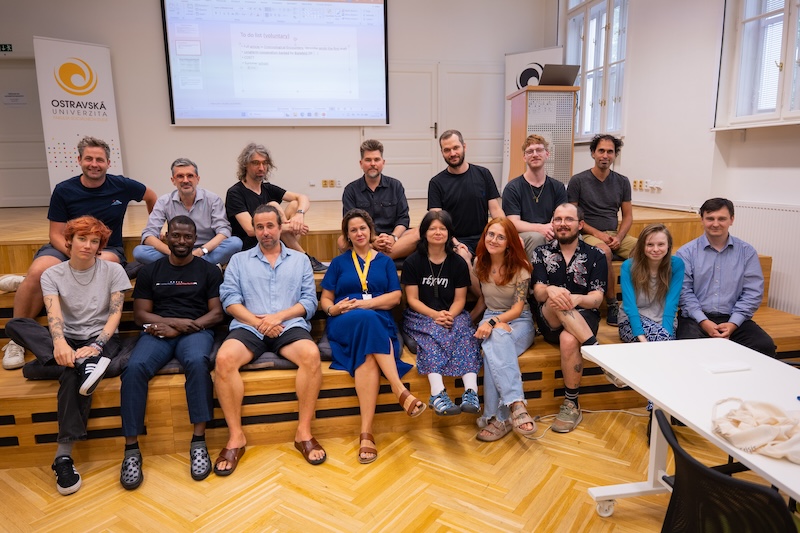
Answers to these questions were sought by the participants of the Central and Eastern European Symposium on Critical Criminology, held from 17 to 19 August in the Study Lounge of the Faculty of Social Studies at the University of Ostrava.
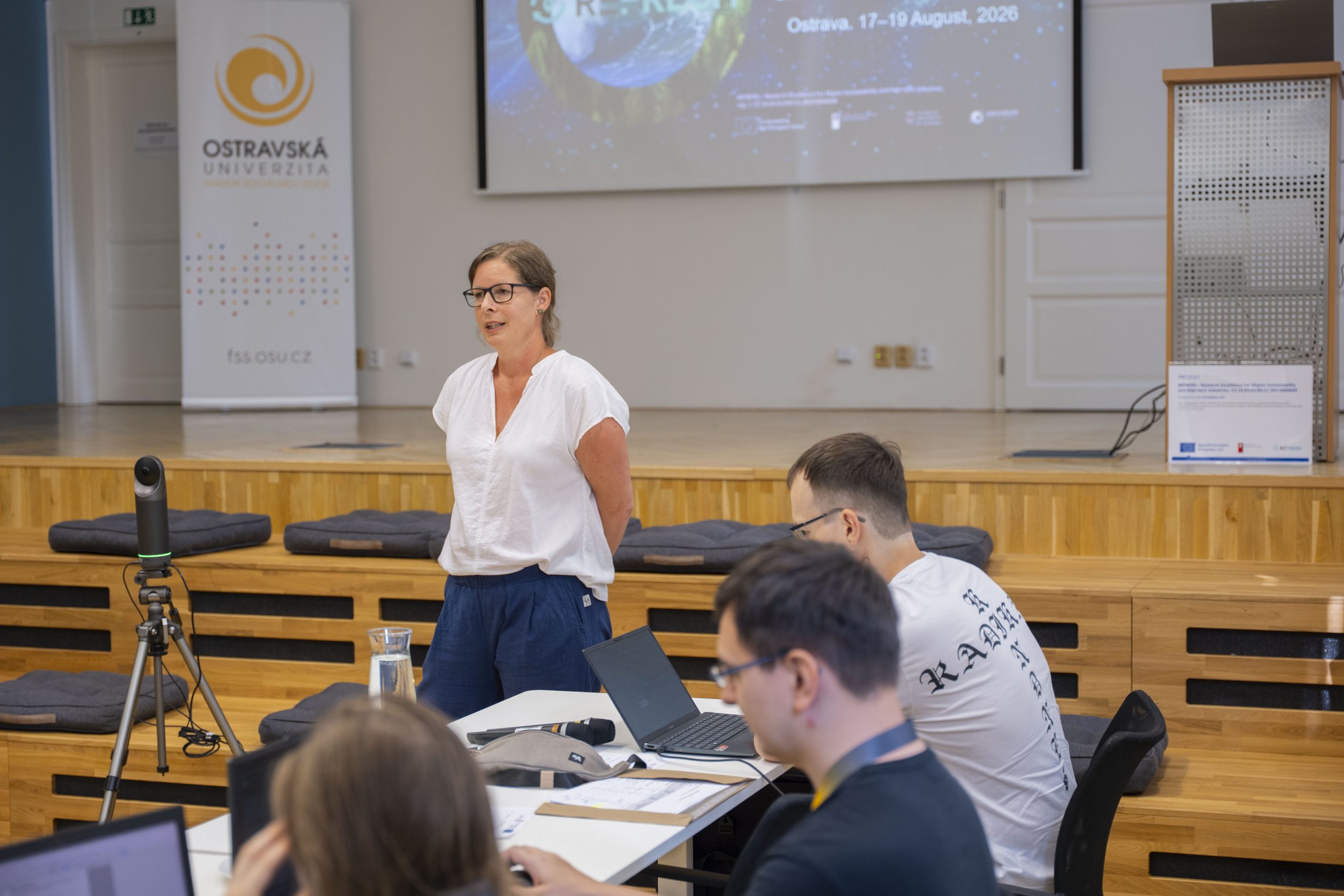
On the first day, we presented the history of criminology, focusing on its critical branch in the countries represented. On the second day, we turned to our own research in a series of discussion panels. In closing, we summarized what we had learned along the way and took part in a workshop on the methods of critical pedagogy led by Maryja Šupa of Vilnius University.
The symposium participants agreed on the need to develop a specifically Central and Eastern European perspective, which would make it possible to grasp criminologically relevant topics in the region more meaningfully than current theoretical frameworks allow.
The contemporary production of criminological knowledge is concentrated in the United States, the United Kingdom, and other anglophone countries. The idea of holding the symposium arose in large part as a response to a long-felt frustration with this state of affairs – theory produced in the West is simply not able to fully capture the processes taking place in Central and Eastern Europe.
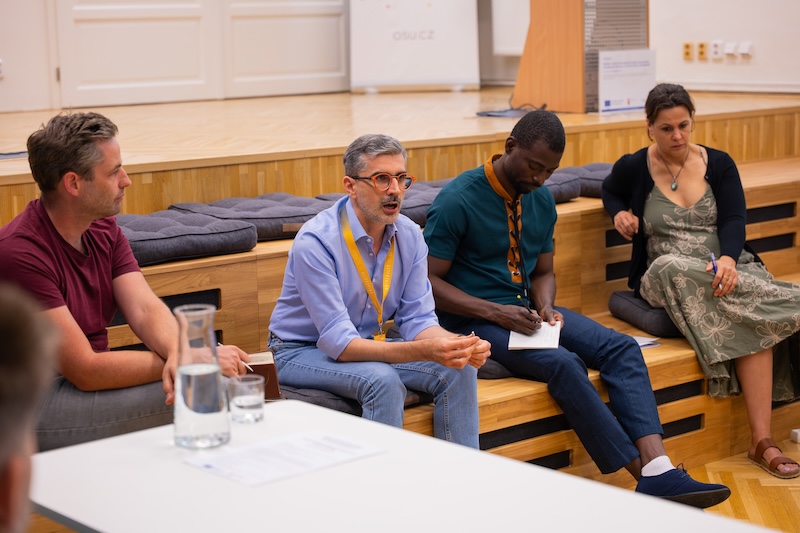
Partly because of the relentless pressure to publish, criminologists here find themselves far more familiar with the situation in Chicago and London than in neighbouring countries. The symposium was seen as one of the first steps toward changing that.
Gathering experiences from across the region and working together to develop regional theory makes it possible to overcome the still marginal position of criminology in these countries, a marginality sustained in large part by a shortage of resources that is characteristic of the social sciences here more generally.
Comparative empirical research proves especially important in this context. Working jointly on particular topics within a selected theoretical framework can deepen our understanding not only of what we share across the region but also of what sets us apart.
However much the societies of Central and Eastern Europe have in common, the symposium identified substantial differences in their historical and social development, including in the development of criminology as a social science discipline and in the topics that critical criminology addresses.
The experience of the post-Yugoslav war led in Slovenia to a strong research interest in war crimes, crimes against humanity, and genocide. A shared border with countries outside the Schengen area shows up, above all in Poland but also in Lithuania, as greater attention to the criminalization of migration and to human rights violations. State socialism in Hungary was in some respects freer than its Czechoslovak counterpart, so critical criminology was being reflected on there even before the regime change.

What all these countries share is the experience of state socialism and the social transformation that followed. That transformation was in many respects criminogenic, but it also brought the creation of oversight institutions, partly in response to the conditions of the accession process to international organizations such as the European Union.
The significance of building these institutions becomes clear when compared with the situation in Austria. For instance, there is still no independent body charged with overseeing the activities of the security services, and it was only recently that a freedom of information act was adopted there.
We see an awareness of the existing differences as an advantage in building criminological theory. On the one hand, they offer an opportunity for a deeper understanding of local specifics through comparison. On the other, they warn us against fetishizing the regional perspective, which can lead to overstating the differences that exist between West and East.
Criminologists have only recently begun to take a serious interest in the history of their discipline in Central and Eastern Europe, and there is even less awareness of how its critical branch developed. At the symposium, we agreed that the label “critical” should serve not so much as a pretext for digging trenches between traditional and critical criminology, but rather as a prompt to think through what this approach can mean in our region and what it can achieve.
Critical criminology was born in the 1960s in response to growing dissatisfaction with mainstream criminology in the United States and the United Kingdom. It is a child of an era marked by the rise of new social movements that sought to overcome social inequality across many domains.
Critical criminologists showed how the criminal justice system – until then treated in criminology largely as a source of data rather than as an object of research – functions as one of the key mechanisms reproducing the vertical structure of society.
Gerlinda Šmausová, probably the only Czech representative of critical criminology before 1989, once put it this way: “Just as universities reproduce the highest echelons of the social pyramid, criminal law reproduces its bottom.”
At the same time that critical criminology was developing, criminological research and teaching were being revived in the countries of the Eastern Bloc. The notion that crime would disappear once capitalism was abolished began to look problematic as crime, especially among young people, rose – even though this notion never entirely vanished from official ideology. A critical current, which turns its attention to the “dysfunctions” of criminalization and of the state bodies that implement it, could not take root in an unfree environment. After all, Šmausová herself became a critical and feminist criminologist only after emigrating to West Germany.
One of the key themes of critical criminology in Central and Eastern Europe after 1989 became the processes of marginalization and criminalization of the Roma population and of other social minorities, migrants included. It was precisely in these cases that the “dysfunctions” of penal policy described above showed themselves most clearly. Researchers often concluded that what was at work here was not so much a failure or a defect as the ordinary functioning of the criminal justice system – since that system is always marked by existing inequalities and itself takes part in reproducing them.
Understanding the state as a source of problems rather than (only) their solution places critical criminologists close to civil society and to the necessity of producing their own data on the activities of state bodies and various forms of harm-doing. Whether it is non-profit organizations or less formalized collectives, a substantial part of critical criminological research in the region has been done in dialogue, or in direct cooperation, with these actors.
Critical criminology is critical not only in the sense of criticizing prevailing theories and methods, but also in relation to the contradictions that exist between the principles professed by today’s liberal-democratic regimes and the reality of how state and non-state institutions actually function.
Before departing, the participants agreed to continue the cooperation begun so far. In addition to a further edition of the symposium, which could become an annual event hosted at different institutions, they talked about organizing a summer school of critical criminology for interested students and of submitting a joint project aimed at institutionalizing long-term cooperation.
For the time being, the priority appears to be writing an article that sketches out the theoretical foundations of critical criminology in Central and Eastern Europe. That study could become the starting point for an edited monograph, which would provide ample room for presenting the results of empirical research within a critical framework.
Central and Eastern European critical criminology is an open project whose general aim is to bring together like-minded researchers in order to advance our knowledge of criminological topics while taking their regional specifics into account. Anyone who shares this interest is welcome to join.

REFRESH Project – Research Excellence For REgion Sustainability and High-tech Industries, No. CZ.10.03.01/00/22_003/0000048 is co-financed by the European Union from the Operational Programme Just Transition.