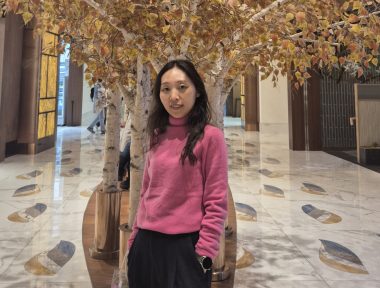



The strategic project LERCO of University of Ostrava has, besides its environmental impact, an influence on the transformation of the region in terms of brain gain. Researcher Yunmin Jung, originally from South Korea, moved to Ostrava specifically to work on the project.
 7 min.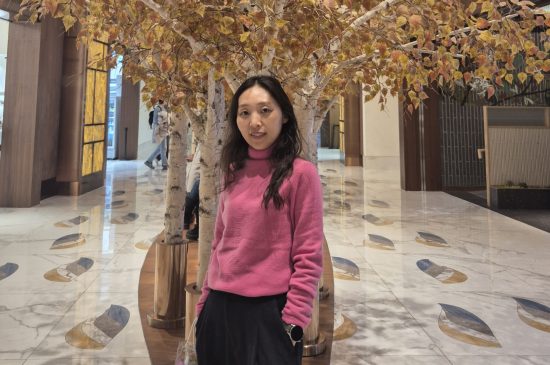
Yunmin Jung leads a research group working on a patent that could potentially revolutionize cancer treatment. Yunmin Jung has been at Ostrava University for less than six months, but her interdisciplinary expertise in biology and optics is already an enormous benefit to the project. In the interview, we focused not only on her groundbreaking research but also on the human aspect of the radical decision to relocate for science to a different cultural context.
Currently you hold the position of principal investigator in the LERCO project research group. This position required you to move to another country. What led you to such a radical decision?
To be honest, after my studies I was looking for a principal investigator position. It was not easy at all, but I eventually found an open position in the LERCO project. In my situation, it was somewhat difficult to find a suitable position. I have a Ph.D. in chemical physics and work in biophysics, immunology, and optics, so I have a very specific interdisciplinary background. Finding a principal investigator position was very challenging. Most universities offer very specific topics – only in immunology or only in biophysics. It took a long time to find a position that matched my expertise. When I came across the LERCO project, I did not hesitate. I see this opportunity as a significant step in my career. I have studied abroad for eleven years during my Ph.D. and postdoc, so I had no concerns about moving. Europe is familiar to me.
Have you ever been to the Czech Republic before?
Yes, several times during my Ph.D. in Israel. It was relatively close, and I visited about twice. I was interested in the culture and had already learned a lot about the Czech Republic. As a person of faith, I was most impressed by Jan Hus. He did a lot for Christianity, and I consider him a very important historical figure. At that time, I traveled only as a tourist, but I always like to read about significant topics and use my trips as a tool for personal development.
While looking for a suitable position, did you also look in Korea, or did you know right away that you wanted to move to Europe?
I did my postdoc in the USA in LA Jolla. Due to COVID, I had to return to Korea, where I found an institute where I could realize myself. In the USA, I focused more on biology, which honestly started to bore me a little. I wanted to return to research where I could combine technology with immunology. I worked at IBS Centre for Nanomedicine in South Korea, where I investigated the application of nanotechnology in biomedicine. Still, I knew it was only a temporary station, and I would look for a position elsewhere because the scientific culture in Korea did not suit me. The position in LERCO seemed ideal, and during the job interview, I had a very good feeling both scientifically and personally.
Within the LERCO project, you and your team are currently applying for a patentthat could lead to revolution in cancer treatment. Can you explain what you are working on?
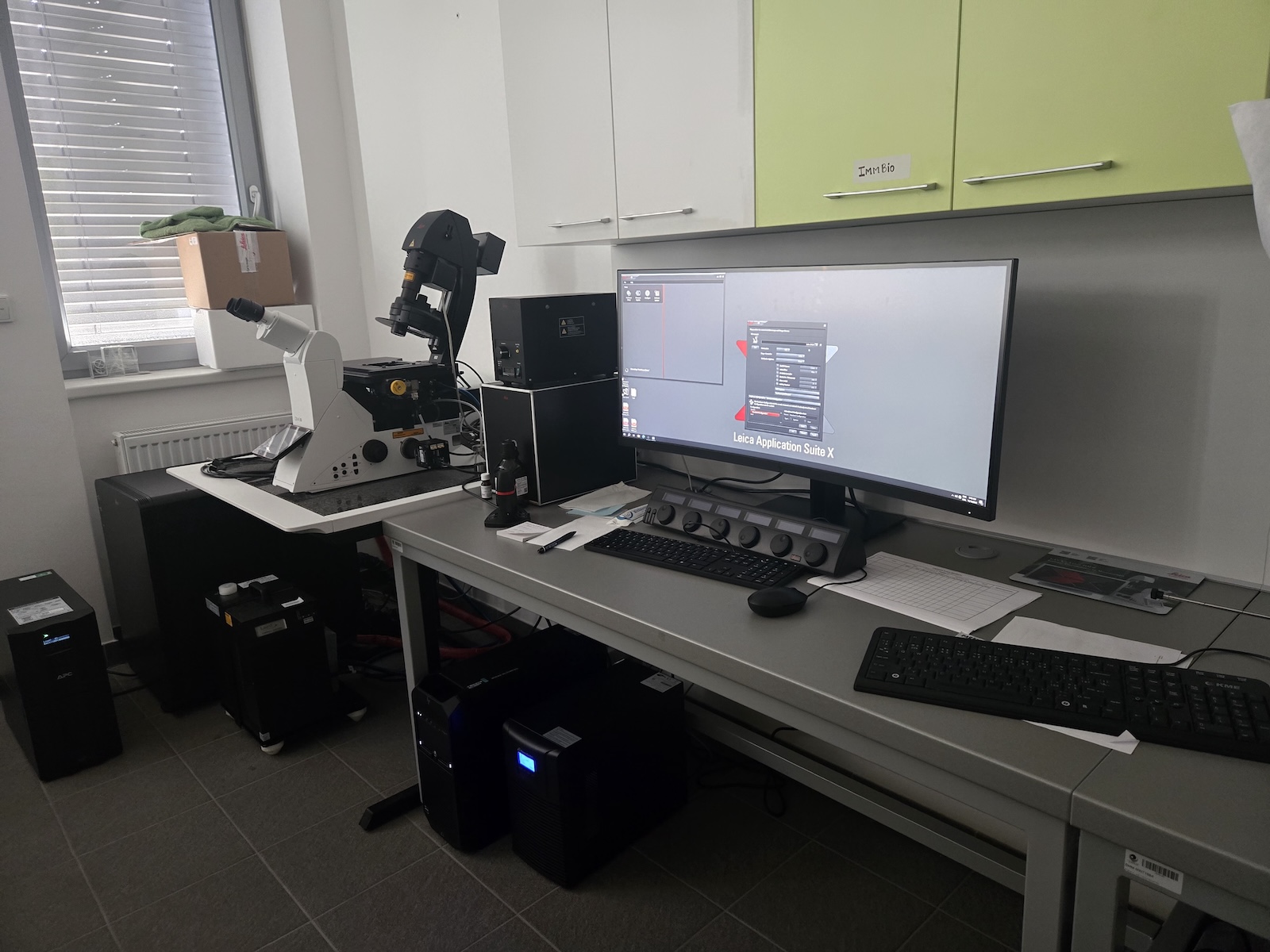
My team is working on optogenetics and the control of immune cell activation. The goal of the research is to regulate when and how immune cells are activated, remain active, or are suppressed. It is a set of signals and mechanisms that turn on, enhance, dampen, or switch off the activation of these cells so that the response is neither too weak nor excessive. As I mentioned, I am also an expert in optics and microscopic techniques, which I apply in this research. I wanted to use optical technologies to control cells. One of the techniques is optogenetics. I want to use light to control cell activities, in simple terms, turning light on and off directed at the affected area and controlling immune cell responses.
What impact could your research have for ordinary people?
It is still in its early stages, but ultimately it could lead to a revolution in cancer treatment. We want to use light to activate cell receptors so they can recognize cancer cells and start treating them. Unlike chemotherapy, light acts locally and does not affect healthy cells, whereas chemotherapy cannot be precisely controlled and also destroys healthy cells, causing hair loss and other health complications. In light therapy, only the cells immediately near the affected area are activated, not all cells. Light-based treatment could avoid a significant proportion of the side effects of current treatments because it can be controlled in time and space.
What does a typical workday look like for you?
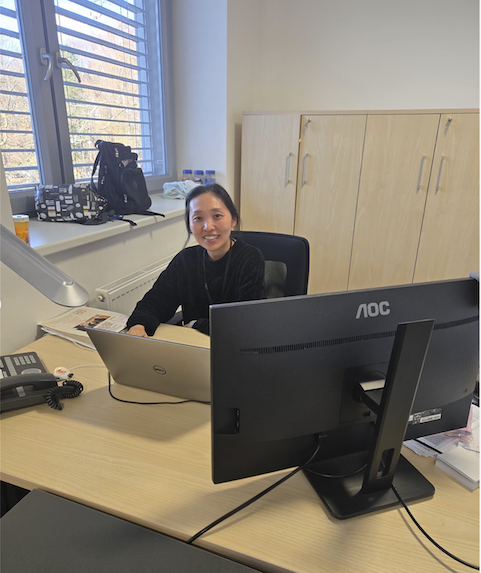
As the team leader, I handle a lot of bureaucracy. In the morning, I go to my office at the Medical Faculty next to the LERCO building, make coffee, and spend one to two hours handling emails. Then I check in with my team to see if any situations require immediate attention. Usually, it is just a quick phone call or chat, sometimes a brief in-person meeting. At this stage of research, I analyze previously collected data, so lately I have been working on codes and analyses on the computer. I usually spend the whole afternoon on this. At the end of the work day, I search for news in our research field to stay up to date. I also have online meetings with colleagues in Korea and Israel. This is a typical day, and of course, I take lunch in between.
We talked about your international experience in science. How do you perceive the Czech scientific environment?
Honestly, most of the time I am sitting at my computer analyzing data, so I have not fully experienced it yet. However, colleagues at the university are very open to any discussion, support each other, and are willing to try innovative ideas and collaborate in research. I think this environment is essential to establish connections between research groups in the second phase of the project. I see it as an important component; there are no barriers between us, and we openly share not only ideas but also materials. I have been here for five months, so these are perhaps only first impressions. To be honest, I have also encountered some negative experiences, for example, bureaucracy in the Czech Republic is endless, and for some documents, I have to wait months.
Yunmin Jung was born in Pohang in South Korea, and grew up in Seoul . She earned a Ph.D. in Chemical Physics at the Weizmann Institute of Science in Israel. During her Ph.D. and postdoctoral studies, she spent 11 years abroad, especially in Israel and the USA (La Jolla Institute for Immunology, La Jolla ). She specializes in biophysics, immunology, and optics, giving her a very specific interdisciplinary background. She worked at IBS Centre for Nanomedicine in SouthKorea, focusing on bioengineering and nanotechnology research. She now leads the research group for the LERCO project at Ostrava University, where she is working on a patent in optogenetics for controlling immune cell activation, which has the potential to revolutionize cancer treatment. Her team focuses on targeted control of immune cells using light, which could minimize side effects of current therapies. Her group, the Immuno-Biophysics Lab in Blood Cancer Research Group (BCRG) at the Medical Faculty of Ostrava University, is currently seeking highly motivated Master’s and Ph.D. students interested in optogenetics, immuno-cell therapy, super-resolution imaging, and biophysics.Yunmin Jung appreciates the openness and collaboration of the Czech scientific environment and sees this experience as a significant step in her career and personal development, as it combines scientific excellence with living in a new cultural context.

Life Environment Research Center Ostrava (LERCO) is a newly established scientific and research hub that serves as one of the key instruments enabling the transformation of the Moravian-Silesian Region (MSR) from a “coal-based” to a “healthier and smarter” region. With state-of-the-art facilities and nine excellent research teams, the project supports a wide and unique interdisciplinary focus across biomedical, natural, and behavioral sciences – ranging from basic research and experimental development to applied research – in collaboration with scientific and research institutions (University of Ostrava, University Hospital Ostrava, VSB–Technical University of Ostrava) and other national and international academic and commercial partners.
The project’s goal is to comprehensively support the development of the innovative research potential of the Moravian-Silesian Region in non-technical disciplines, with impacts on: public health, strengthening cooperation between science, research, and the commercial sector (including support for the creation of spin-off and start-up companies), promoting regional employment, increasing the region’s attractiveness in science, research, education, and for municipalities through the provision of innovative tools. The project is not based on commercial activities or their direct support; rather, in the long term, it aims to create a suitable foundation for future (and desirable) collaboration between the research and application spheres in the region – a connection that has so far been insufficiently developed.